Moldex PPE: 7 Real Questions from a Safety Buyer Who Learned the Hard Way
-
1. Is Moldex a solid choice for industrial respirators, or is it a budget compromise?
-
2. Are the Moldex Pura-Fit earplugs worth the hype? And what about the weird shape?
-
3. Can I use the Moldex 9000 full face respirator with prescription glasses?
-
4. What's the real difference between the Moldex SparkPlugs and the Pura-Fit earplugs? I keep mixing them up.
-
5. Okay, more importantly: is the Moldex N95 (like the 2200 series) comfortable for 8-hour shifts?
-
6. We got an OSHA visit. Does Moldex equipment help with compliance, or do I need additional documentation?
-
7. What about the Moldex safety glasses? Are they just an add-on, or actually good?
I've been handling PPE orders for industrial clients for about six years now. In that time, I've personally managed procurement for over 4,000 units of respirators and earplugs across different facilities. And honestly? I've made some pretty expensive mistakes along the way—stuff that cost us real money and, worse, embarrassed me in front of plant managers.
This FAQ is basically the checklist I wish I'd had starting out. It's built from questions I've gotten from buyers and from the mistakes I've personally made (and documented) so you don't have to repeat them.
1. Is Moldex a solid choice for industrial respirators, or is it a budget compromise?
Honestly, I used to think 'Moldex' was the budget-friendly alternative when the plant manager wanted something cheaper than 3M. That was my first year, and I was wrong.
Here's what I've learned: Moldex is a legitimate, NIOSH-approved manufacturer—they're not some off-brand. Their 8000 series half-mask respirators are actually really well-designed. The silicone facepiece on the 8200 model? It's way more comfortable for long shifts than some other brands I've tried. For most general industrial settings—dust, fumes, paint spraying—they're a solid choice.
But—and this is the part I had to learn the hard way—they're not the best fit for everyone. If your crew is doing heavy welding or handling highly toxic chemicals, you might want a system with more cartridge options. Moldex's filter selection is broad but not as deep as some competitors.
2. Are the Moldex Pura-Fit earplugs worth the hype? And what about the weird shape?
I get this question a lot. To be fair, when I first saw the Pura-Fit plugs, I thought the tapered shape was a gimmick. Like, just give me the standard foam cylinder, right?
Turns out, the tapered design has a legitimate purpose: it fits a wider range of ear canal sizes without having to 'roll' them down as much. The NRR rating is 33 dB, which is about as high as you'll find for disposable foam plugs. I've tested these in a machine shop with constant CNC noise, and they performed well.
The catch? They're single-use. For a high-turnover environment where workers lose earplugs constantly, the cost adds up. I once ordered a 500-pair bulk box and the guys went through them in a month. If you need reusables, look at their SparkPlugs or the Rockets line, which have a cord and a slightly different design.
3. Can I use the Moldex 9000 full face respirator with prescription glasses?
This was a huge pain point for us. We had a senior operator who wore thick bifocals and absolutely refused to wear a half-mask because his glasses kept fogging up.
The Moldex 9000 series full-face respirator has a decent-sized lens, but it's not oversized. The trick is the frame of your glasses—if you have large, chunky frames, they'll probably push against the face seal and compromise fit. The best solution I found was to buy those low-profile frame inserts for the respirator itself. It costs extra—around $40-60—but it's way better than forcing someone to wear something they hate.
Bottom line: the 9000 is a good respirator for splash and particulate protection, but don't promise your crew it'll be glasses-friendly until you test the fit individually. I learned that lesson when my guy wore it for 10 minutes and complained about pressure on the bridge of his nose.
4. What's the real difference between the Moldex SparkPlugs and the Pura-Fit earplugs? I keep mixing them up.
I swear, the naming conventions in PPE are designed to trip you up. I've made this mistake before: ordered a case of SparkPlugs thinking they were the same as Pura-Fits. Not even close.
Here's the quick breakdown:
- SparkPlugs: Reusable, corded, have a bright yellow stem for visibility in food processing or inspection areas. NRR of 33, same as Pura-Fit, but they're designed to be washed and reused for a few shifts. Better for workers who lose earplugs or for environments where contamination is a concern (food, pharma).
- Pura-Fit: Disposable, foam, slightly smaller in the 'relaxed' state, also with NRR 33. Better for high-turnover, one-day use situations. Cheaper per unit.
My rule of thumb: if the worker is in a clean-ish environment and needs something to last a week, SparkPlugs. If it's a dusty tradeshow or a one-day cleanup, Pura-Fits.
5. Okay, more importantly: is the Moldex N95 (like the 2200 series) comfortable for 8-hour shifts?
This is the question that almost got me fired. I ordered 500 units of the 2200 N95 for a large painting crew. I assumed 'N95 is N95,' right? Big mistake.
The 2200 is a cup-style respirator with a foam nose seal. It's fine for short jobs—like an hour of sanding or spraying. But for eight continuous hours? The foam can feel like it's digging into the bridge of your nose after a few hours, and the exhalation valve can get warm and stuffy. Some workers loved it; others literally removed it after 3 hours.
If you need full-shift wear, I'd actually recommend looking at the 2400 series (the flat-fold style) or even the 4600 series (which has a softer inner lining). It's not a massive price difference, but comfort literally determines whether workers wear the PPE. A box of respirators is useless if it's sitting on a shelf.
6. We got an OSHA visit. Does Moldex equipment help with compliance, or do I need additional documentation?
This is a surprisingly common question. To be clear, Moldex gear itself is compliant—it's NIOSH-approved. But the product alone doesn't guarantee a clean inspection.
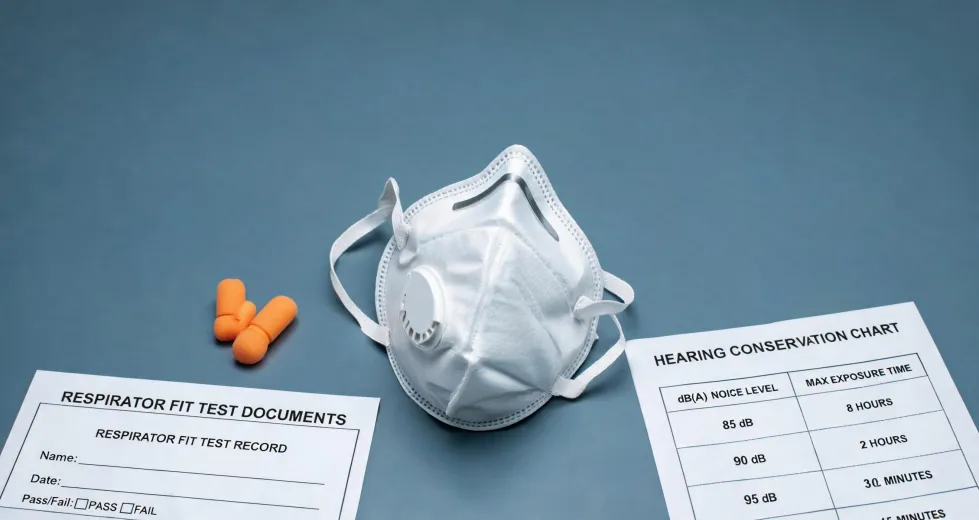
The thing that caught us off guard: the inspector asked to see our Respiratory Protection Program documentation. The respirators are only one part of the equation. You need fit-testing records, training records, and a written program in place. Having a drawer full of Moldex 7000 series half-masks won't save you if your guys haven't been fit-tested.
I'd suggest keeping a binder with: (1) NIOSH approvals for each product, (2) fit-test records, (3) training sign-offs. Moldex provides technical data sheets on their site—print those out. Don't rely on a salesperson's promise that 'it's all good.' We got a written warning because we had records for only half our crew. The PPE itself was fine, but the paperwork gap cost us.
7. What about the Moldex safety glasses? Are they just an add-on, or actually good?
I'll be honest: Moldex isn't the first name that comes to mind for eye protection. That's probably because they're newer to that category. I've tried a few of their models—the ones with the foam gasket around the frame.
Honestly, they're decent for basic impact protection (they meet the ANSI Z87.1 standard), and the foam gasket helps keep dust out in a warehouse or woodshop. However, they're not as rugged as a dedicated brand like Gatorz or even the higher-end Uvex models. If you have workers doing grinding or heavy construction, I'd look elsewhere. But for general assembly or light manufacturing, they're a perfectly fine option, especially if you're trying to consolidate vendors.
The main lesson I've learned: Don't overthink the safe choices. The difference between a $15 pair of glasses and a $30 pair is often marginal in real-world performance. Focus on fit and compliance, not the logo.

Jane Smith
I’m Jane Smith, a senior content writer with over 15 years of experience in the packaging and printing industry. I specialize in writing about the latest trends, technologies, and best practices in packaging design, sustainability, and printing techniques. My goal is to help businesses understand complex printing processes and design solutions that enhance both product packaging and brand visibility.