A Buyer's Checklist: Choosing PPE That Saves Money (Not Just Cost)
When This Checklist Helps
You're an office administrator or safety manager tasked with ordering PPE for a crew of 30, 100, or maybe 400 across multiple locations. The sales rep shows you a price list. The low‑cost option is tempting. But I've learned the hard way that the cheapest unit price often costs more in the long run. This checklist walks you through five steps to evaluate PPE — from Moldex N95s and Pura‑Fit earplugs to heatwave safety glasses — so you choose what actually protects your people and your budget.
Step 1: Match Protection to Real Exposure
Before comparing prices, figure out what level of protection your team actually needs. Are they welding, grinding, or handling dust? Do they need a simple N95 or a higher‑rated P100? Over‑specifying wastes money; under‑specifying risks safety violations.
For example, our warehouse has fine silica dust. After consulting the NIOSH Pocket Guide (as of March 2025), I realized a standard N95 wasn't enough — we needed a P100 filter. Moldex’s 7000 series half‑mask with P100 cartridges costs more upfront but saved us from potential OSHA fines and allowed reusable use, dropping per‑shift cost.
“I'm not a certified industrial hygienist, so I can't speak to air sampling. What I can tell you from an admin perspective is: always ask your safety officer for the written hazard assessment before buying anything.”
Step 2: Calculate Total Cost of Ownership, Not Just Unit Price
Unit price is the tip of the iceberg. Here's what I forgot to factor in my first year — cost me $2,100 in reorders.
- Replacement frequency: Disposable vs. replaceable cartridge masks.
- Storage & dispenser costs: Some earplugs (like Moldex Pura‑Fit NRR 33) need a special wall dispenser — that’s a one‑time cost you amortize over thousands of pairs.
- Workers' willingness to wear them: Cheap earplugs that are uncomfortable mean employees wear them less — defeating the purpose and leading to hearing loss claims.
- Shipping & restocking fees: A “low” price from a distant supplier may carry $60 freight. A regional distributor quoting $0.10 more per unit may deliver free and next day.
“The $0.12 earplug from vendor A? After shipping and the fact workers kept losing them because the dispenser didn't fit, the real cost was closer to $0.21 per plug. Moldex Pura‑Fit NRR 33 plugs at $0.18 but with a free dispenser turned out cheaper.”
Step 3: Verify Compliance & Certification
Never assume a “safety” product meets the standard. For respiratory protection in Europe, check FFP2 (like Moldex 2480 FFP2 dust mask) or FFP3 rating. In the US, look for NIOSH approval (e.g., N95, P100). Hearing protectors must have an NRR label — higher is better. Moldex Pura‑Fit NRR 33 is one of the highest I've seen. Safety glasses need ANSI Z87.1+ impact rating — I used Heatwave glasses because they carry that mark and don't fog.
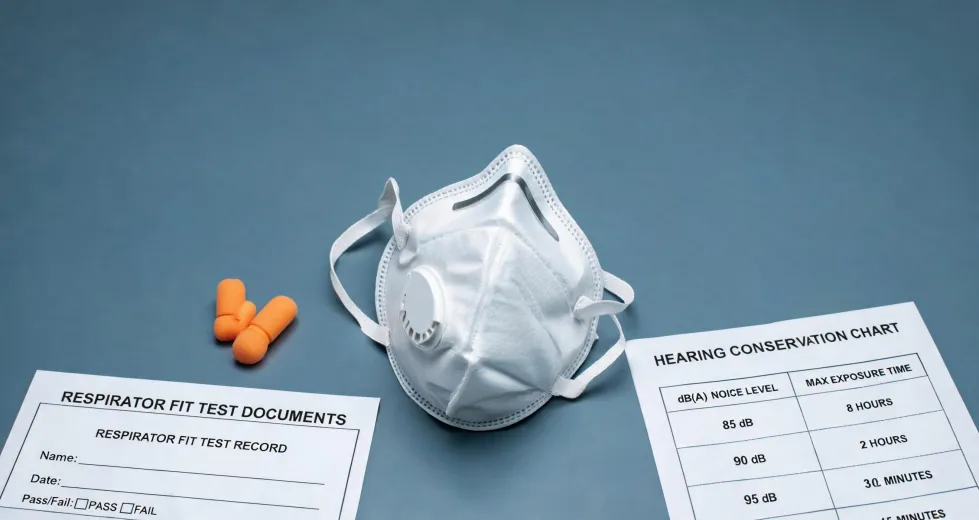
Per OSHA 29 CFR 1910.134 (effective 1998, updated 2022), you must have a written respiratory protection program. I learned this when our HR department asked for documentation during a routine audit. Now I always request the certificate of compliance as PDF before placing any order.
Step 4: Test Fit & Comfort Before Bulk Order
You wouldn't buy 500 pairs of work boots without a fitting session, would you? Yet many buyers order 10 cases of masks or earplugs based on price alone. Fatal mistake. Different face shapes suit different respirators. I once ordered 500 Moldex 4600 N95 masks because they were cheaper than 3M. Half the crew said they felt too tight. We wasted 250 units. Now I request a sample kit first.
“The question isn't whether the NRR is high enough. The question is whether your employees will wear them consistently.”
For hearing, Moldex Pura‑Fit NRR 33 earplugs are a good start. But we also tested traditional foam plugs because some workers preferred the feel. Let employees try a week's worth before committing to a 12‑case order.
Step 5: Plan for Replacement & Maintenance
Disposable respirators have a shelf life. Filter cartridges expire. If you're storing $2,000 of masks in a damp warehouse, they may degrade before use. I track expiration dates in our inventory spreadsheet — built this after discovering 30 boxes of expired N95s in 2023.
Same logic applies to other consumables. Knowing how to change a water filter cartridge at the right interval can prevent scale buildup and extend appliance life — but that's a different budget. The point is: total cost thinking works for any recurring purchase.
For eye protection, Heatwave safety glasses come with a scratch‑resistant coating. They cost more upfront but lasted three months vs. six weeks for cheaper ones. Net savings: $180 a year.
Common Mistakes I See (and Made)
- Ignoring employee preferences. PPE that sits in the break room unused is 100% waste.
- Ordering odd sizes. Most respirator brands come in multiple sizes. Order a mix the first time.
- Underestimating admin time. Switching to a vendor that offers online ordering with auto‑replenishment saved our accounting team six hours a month. That's a tangible cost saving.
- Not documenting the decision. When finance asks why you chose Moldex over a cheaper brand, having a TCO spreadsheet proves you're responsible.
One more thing — I'm not a footwear expert, but I do apply the same framework when our team needs work boots. On Cloud work boots? I'd request a wear test first. The unit price might be higher, but if they last twice as long and reduce foot fatigue, total cost could be lower.
“After 5 years of managing PPE purchases for 400 employees across 3 locations, I've learned that the cheapest option is rarely the most cost‑effective. Start with this checklist and save yourself the reorder headaches.”

Jane Smith
I’m Jane Smith, a senior content writer with over 15 years of experience in the packaging and printing industry. I specialize in writing about the latest trends, technologies, and best practices in packaging design, sustainability, and printing techniques. My goal is to help businesses understand complex printing processes and design solutions that enhance both product packaging and brand visibility.