The True Cost of "Cheap" Safety Gear: A Procurement Lesson
Last February, I Had a Problem
I manage procurement for a 30-person metal fabrication shop. Our annual PPE budget runs about $45,000—respirators, gloves, glasses, the works. In early 2024, we had to gear up for a new contract that meant more grinding and welding around fine particulates. I needed N95 disposable respirators and a few half-face respirators for the guys doing heavier work.
Nothing unusual, right? But here’s the thing: we’re not a huge account. Our orders aren’t flashy. And I’ve learned the hard way that being small can get you treated like a nuisance—unless you find the right supplier.
The Search Begins
I reached out to three vendors. Two were big national safety distributors. The third was a smaller outfit that carried Moldex among other brands. Honest? I almost didn’t bother with the third one. But I’m glad I did.
From the outside, it looks like smaller vendors are more expensive because they don’t have the volume to negotiate. The reality? That’s sometimes true on unit price, but total cost is a different story. Most buyers focus on per-unit pricing and completely miss setup fees, shipping minimums, and split-order charges that can add 30-50% to the total.
What I Found When I Got the Quotes
Vendor A (big distributor) quoted $0.36 per unit on a case of Moldex 2200 N95 disposable respirators, molded cup style. Vendor B offered a different brand at $0.31. Vendor C—the smaller one—came in at $0.38. Straight up, I was leaning toward B.
But then I dug into the details.
- Vendor A: Free shipping over $500 (our order was $432). $25 handling fee. Minimum order of 10 cases—way more than we needed.
- Vendor B: $0.31 unit price looked great. Until I saw the $150 freight charge and a $20 'small order fee' because we didn’t hit their $600 threshold. Also, the brand wasn’t NIOSH-approved for the specific particles we were dealing with—I had to check the certification numbers on their site.
- Vendor C: $0.38 per unit. Flat $8 shipping. No handling fee. Minimum order? Two cases. And they included a call with a safety specialist to help me match respirators to our specific application.
I want to say Vendor A’s total was around $385 after everything, but I’m mixing it up with another quote—I’d have to check my spreadsheet. Honestly, what mattered was that the “cheap” option from Vendor B ended up at $492 when all was said and done. Meanwhile, Vendor C’s final came to $344. That’s a 30% difference hidden in fine print.
The Half-Face Respirator Decision
We also needed a few half-face respirators for workers doing extended grinding near stainless steel—that’s a NIOSH P100 requirement for metal fume exposure (source: NIOSH 42 CFR Part 84).
Everyone quoted Moldex half face respirator options. The 7000 series, specifically. But Vendor A pushed a competitor’s brand, saying it was “basically the same.” I asked for fit test data and replacement filter costs. They couldn’t provide either immediately.
Here’s a mistake I made earlier in my career: I assumed “standard size” meant the same across brands. It doesn’t. I said “medium” to one vendor—they heard “medium in their brand.” Result: a $270 order of cartridges that didn’t fit our existing masks. We had to eat the cost.
This time, I called the Moldex rep directly. Small company? They still picked up on the second ring. They sent me a sample to test fit with my team before I committed. From the outside, that seems like common sense. What you don’t see is that most big distributors won’t do sample runs for shops our size. They expect you to buy 50 units blind.
Where I Almost Messed Up
I knew I should get written confirmation on the filter compatibility, but thought “we’ve worked with Vendor A for years, they know our needs.” That was the one time a verbal agreement got forgotten. They shipped cartridges for a different series. Cost us $200 in return shipping and a day of lost production.
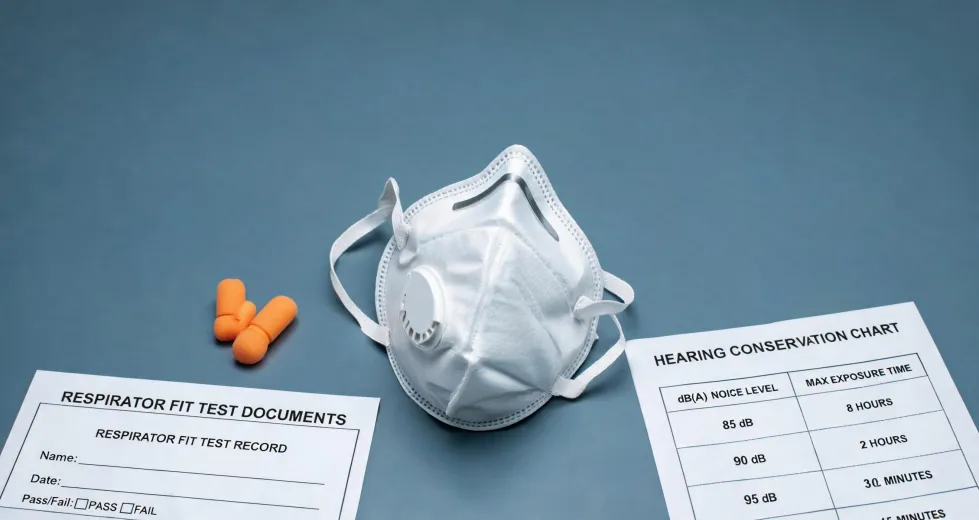
I decided to go with Vendor C for the Moldex half-face respirators (three units, with P100 filters). Total: $620. Vendor C also helped me match Moldex Rockets earplugs (NRR 33) with the order—we added them on to consolidate shipping. Saved the company about $80 in separate shipping costs.
The Result: More Than Just Savings
Over the past six years of tracking every safety supplies invoice, I’ve found that about 22% of our budget overruns came from hidden fees and incorrect orders due to poor communication. Implementing a policy of requiring itemized quotes with all-in costs cut those overruns by nearly 60%.
That Moldex N95 molded respirator order? Zero issues. The half-face units? Fit perfectly. My guys actually liked them—they report less fogging with safety glasses than the previous brand we used. And because we bought from a supplier that treated our small order seriously, we now have a direct line for questions. When I needed to reorder 90 days later, I called the same person. That level of service is hard to put a price on.
What I’d Tell Another Buyer
If you’ve ever had a small order ignored or been hit with surprise fees, you know the frustration. Here’s what I learned:
- Total Cost of Ownership is real. Unit price is just the headline. Look at freight, handling, minimums, and potential reorder costs.
- Don’t assume big vendors care about you. Some do. Many don’t. The vendor who answers your questions at $400 order is the one you want when you grow to $4,000.
- Test fit before you commit. Even good respirators fail if they don’t seal. If a supplier won’t send a sample, that’s a red flag.
- Small doesn’t mean unimportant—it means potential. Good suppliers know this.
I still use Vendor A for some consumables. But for respiratory protection, I stick with the people who treated my $344 order like it mattered. Because it did. And it does.

Maeve Callahan
Maeve Callahan is a head-protection analyst covering Type I and Type II hard hats, climbing-style safety helmets, bump caps, chin straps, suspensions, liners, and face-shield carriers. She applies ANSI Z89.1, EN 397, and EN 12492 criteria while comparing impact attenuation, penetration resistance, lateral deformation, electrical class, retention strength, field of vision, mass, fit range, and temperature conditioning. Her guides help EHS teams, contractors, utilities, and buyers select helmet systems for overhead hazards, work at height, electrical exposure, accessory compatibility, and worker acceptance.