Moldex Respirator FAQs: P100, N100, and Everything In Between
-
What exactly is Moldex, and why do I keep hearing about it?
- What's the deal with Moldex P100 vs. N100? Is there even a difference?
-
Are 'Pink Handcuffs' earplugs actually good, or is it just a gimmick?
-
Loop earplugs are trendy. Should I use them for work?
-
So, when do I need a Moldex half-mask vs. a full-face respirator?
-
How do I change the battery in a hardwired smoke detector?
-
Final thought: Don't skimp on the filter change schedule.
What exactly is Moldex, and why do I keep hearing about it?
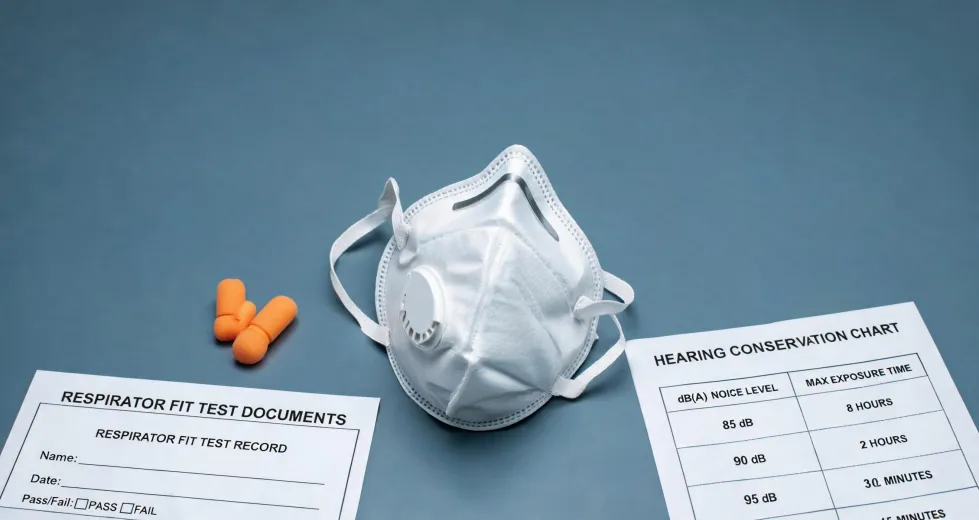
In my role coordinating PPE for industrial clients, I get asked this all the time. Moldex is a US-based manufacturer specializing in respiratory, hearing, and eye protection. They're a major player in the industrial safety space, but they aren't a household name like some of the bigger conglomerates. What they are, though, is a specialist. They don't make duct tape or Post-it notes; they focus on making NIOSH-approved respirators and high-NRR earplugs. That focus leads to some interesting design choices—like their contoured N95 masks that don't collapse as easily, and the 'Pink Handcuffs' earplugs, which are hard to miss.
What's the deal with Moldex P100 vs. N100? Is there even a difference?
This is the most common mix-up I see, even among experienced safety managers. Let's clear it up. Both N100 and P100 filters offer 99.97% filtration efficiency against airborne particulates. The difference isn't what they filter, but how they handle oil. N100 is Not resistant to oil. If you're in a workplace with oil-based aerosols (like machining, some paints, or lubricants), the N100 filter will degrade quickly. P100 is oil-Proof (or oil-resistant). It's tested with a sodium chloride aerosol and a DOP oil mist. For any environment with oil, you're legally required to use a P-series filter. Think of N100 as a specialist for clean, dry particulates; P100 is the standard go-to for 90% of industrial settings.
A real-world example from my files
In March 2024, a client called at 4 PM needing a rush order of 50 respirators for a construction crew working near a concrete saw. They'd been using N95s. The saw creates silica dust, which is dry, so N95s are fine. But the site also had a diesel generator running nearby. That's an oil-based aerosol. We quickly shifted them to a Moldex 9000 series half-mask with P100 filters. It saved them a compliance headache and a potential fine. N100 would have been wrong for that job.
Are 'Pink Handcuffs' earplugs actually good, or is it just a gimmick?
I'll be honest: the name is memorable, but the product is legit. They're officially the Moldex SparkPlugs, but everyone calls them Pink Handcuffs because the bright pink cord looks like a pair of handcuffs. The real story here is the NRR rating. They have an NRR of 33, which is about as high as you can get for a foam earplug without going custom-molded. That NRR 33 means a theoretical 33 dB of noise reduction. In the real world—with real people who don't insert them perfectly—you're probably getting 20-26 dB, which is still excellent for noisy industrial environments. That kind of performance isn't a gimmick.
Per NIOSH guidelines, an NRR of 33 is in the top tier for disposable foam earplugs. It's not a marketing claim; it's a tested number.
Loop earplugs are trendy. Should I use them for work?
I'm gonna be honest here: Loop earplugs are pretty good for concerts or sleeping in a noisy hotel room. They're designed to attenuate sound evenly (so music still sounds good). For industrial work, though? In my experience, they're usually not the right choice. Loops typically have an NRR of 18-24, which is fine for steady-state noise, but not for the impulse noises (like a stamping press) found in many factories. Also, they're easy to lose on a job site—they're small and not attached to a cord. If I need to protect a worker's hearing consistently for 8 hours on a noisy line, I'm reaching for a traditional foam plug (like Moldex Rockets with an NRR of 33) or a reusable banded plug. Loops are great; they're just optimized for a different use case. I've seen workers buy them, lose one within a week, and then complain. Think of them as lifestyle earplugs, not industrial PPE.
So, when do I need a Moldex half-mask vs. a full-face respirator?
That's the $64,000 question, and the answer depends entirely on what you're protecting against, not just how much protection you think you need. Here's the rule of thumb I use:
- Half-mask (like the Moldex 7000 or 8000 series): Good for particulates (dusts, fumes, mists). You're protecting your lungs. This covers 95% of industrial applications. Think sanding, grinding, painting (with a cartridge), or working with concrete.
- Full-face respirator: Necessary when there's a risk of eye irritation from vapors or splashes, or when you need the highest level of protection against high-toxicity contaminants. For example, some chemical vapors (like formaldehyde) can cause serious eye damage. A half-mask doesn't help there.
How do I change the battery in a hardwired smoke detector?
Wait, this question comes up more often than you'd think in an industrial context. Not for the office, but for the job site. Trailers, temporary structures, and even some work sheds have hardwired alarms. Here's the trick: hardwired detectors almost always have a battery backup (usually a 9V or a AA battery). The primary power is the 120V AC line. To change that backup battery:
- Identify the model. Look for the brand (like First Alert or Kidde). This matters because the battery compartment is sometimes hidden behind the detector, requiring you to twist the unit off its mounting plate.
- Disconnect power (optional, but smart). You don't have to kill the circuit breaker for just a battery swap, but if the unit is hardwired and you're not comfortable, flip the breaker. The real danger is the backup battery powering the unit. Just swap it.
- Twist to remove. Most units unlock with a quarter-turn counter-clockwise. The detaching part is when you hear a loud chirp. That's normal.
- Replace the backup battery. Usually a 9V. I keep a few in my truck. Do not use rechargeable 9V batteries in smoke detectors; they don't provide a consistent enough voltage for a reliable chirp alarm.
Final thought: Don't skimp on the filter change schedule.
In my first year as a safety coordinator, I made the classic rookie error: approved a bulk order of P100 filters but didn't enforce a change-out schedule. We just told the crew to 'change them when they get hard to breathe through.' What a mistake. They'd use a filter for three times its intended service life. The result? An increased breathing resistance that lead to one worker experiencing a headache and nausea from CO2 buildup inside the mask. We had to stop the entire line for an hour. The cost of replacing those filters on time? Maybe $200. The cost of the line stoppage? About $4,000. Learned that lesson the hard way. Change your filters on a calendar schedule, not a feel schedule.

Jane Smith
I’m Jane Smith, a senior content writer with over 15 years of experience in the packaging and printing industry. I specialize in writing about the latest trends, technologies, and best practices in packaging design, sustainability, and printing techniques. My goal is to help businesses understand complex printing processes and design solutions that enhance both product packaging and brand visibility.