Moldex N95 vs Half-Face Respirators: A Quality Inspector's Honest Take
The question I get most often
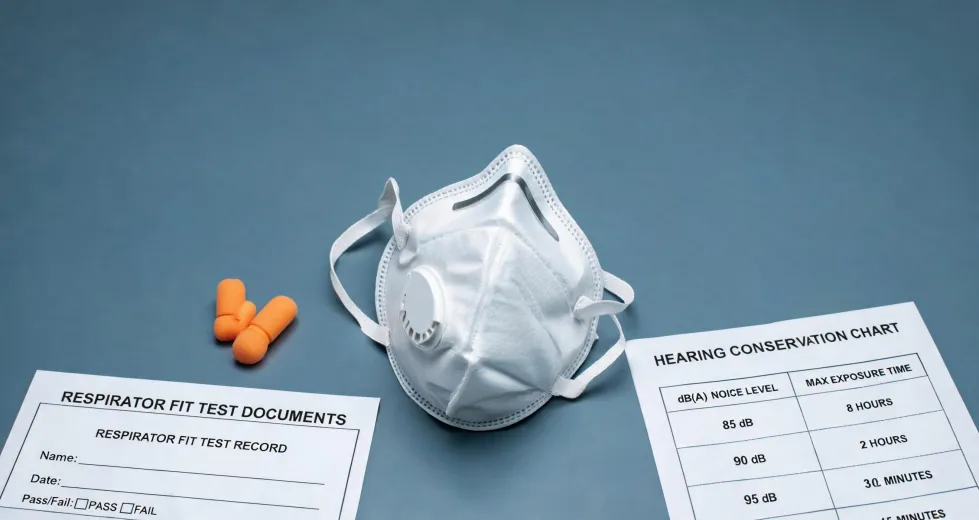
I'm a quality compliance manager at a PPE distributor. Every month I review roughly 400-500 units of respiratory protection—N95s, half-face respirators, P100 filters—before they go to our customers. In 2024 alone I rejected about 8% of first deliveries for seal integrity issues or labeling errors. So when someone asks me whether they should buy Moldex N95 masks or a Moldex half-face respirator with P100 cartridges, I don't give a textbook answer. I give the answer I've learned from 4 years of inspecting these things.
The conventional wisdom says N95s are simpler and cheaper, half-face respirators are more serious protection. That's true—but only part of the story. Let's compare them across the dimensions that actually matter for your workplace.
Protection level: N95 vs P100
From the outside, both look like they filter particles. The reality is they operate at completely different efficiency levels. An N95 (like the Moldex 2200 or 2400 series) filters at least 95% of airborne particles against the most penetrating particle size. A P100 filter (like the Moldex 8000 series half-face with P100 cartridges) filters 99.97%—essentially everything down to 0.3 microns.
People assume that 95% vs 99.97% is a minor difference. What they don't see is the real-world impact: in environments with fine dusts (welding fumes, pharmaceuticals, silica) that extra 4.97% matters enormously. I've seen jobsites where N95s were used for concrete cutting and workers still coughed—not because the mask failed, but because the seal leakage around a disposable N95 is inherently higher. A half-face respirator with an elastomeric facepiece and two straps creates a much better seal.
Granted, for nuisance dusts and non-toxic particles, an N95 is perfectly adequate. But if you're dealing with hazardous particulates (lead, asbestos, mold), P100 is the minimum standard (Source: OSHA 29 CFR 1910.134 Table 1).
Total cost of ownership
This is where my experience got flipped upside down. Everything I'd read said N95s are cheaper because they're disposable. In practice, I found the opposite—depending on usage patterns.
Let's run the numbers. A Moldex N95 costs roughly $2-4 per unit (based on bulk pricing quotes, early 2025). A Moldex half-face respirator (7000/8000 series) costs $15-25, and a pair of P100 cartridges costs $10-15. On the surface, the half-face setup is $25-40 vs $2-4 per mask. But here's the catch: an N95 is single-use (technically disposable after each shift or when damaged). If you have a worker wearing a respirator 8 hours a day for 200 days a year, that's 200 N95s = $400-800 per worker per year. The half-face respirator lasts 2-3 years; cartridges need replacement every 30-40 hours or when breathing resistance increases. So annual cost is more like $20-30 for amortized facepiece + $60-100 for cartridges = $80-130 per year. That gap is massive (surprise, surprise: the 'cheaper' option actually costs 3-5x more over a year).
In my Q1 2024 audit, I compared a facility that used N95s exclusively vs one that switched to half-face P100. The total PPE spend dropped 37% after the switch, and worker compliance rates went up (half-face is more comfortable for long shifts). To be fair, the N95 approach is simpler logistically—no cartridge inventory to manage. But total cost of ownership argues strongly for half-face if you have regular respiratory protection needs.
Compliance, training, and who's responsible
A common question that comes up: who is responsible for training workers on the use of PPE? Under OSHA 29 CFR 1910.134, the employer is responsible for providing training and ensuring proper use. That includes:
- How to properly don and doff the respirator
- How to perform a user seal check each time
- When to replace filters/cartridges
- Limitations of each type
This was true 20 years ago, and it's still true today. But what's changed is the availability of training resources—online videos, digital checklists, and manufacturer guides (Moldex provides free training materials, for example). The old belief that 'training means a full-day classroom session' is outdated. Now, a 15-minute hands-on demo plus a quick quiz is often enough for half-face respirator users, as long as it's documented.
Here's the nuance: N95s are often treated as 'simple enough that no training is needed.' That's a dangerous assumption. I've seen workers wear N95s upside down, with the nose clip on the chin, or with gaps at the sides. Training matters regardless of the type. The difference is that half-face respirators force more attention because you have to attach cartridges, check for cracks, and inspect the exhalation valve. That extra friction actually improves compliance in my experience (not that everyone would agree).
When to pick N95 vs half-face
Based on what I've seen, here's a practical decision framework:
Stick with Moldex N95 (like the 2200/Sparks) when:
- Exposure is short-term or intermittent (under 1 hour/day)
- Particles are non-toxic nuisance dusts
- You have high worker turnover (training half-face use on temps is inefficient)
- You need a lightweight, packable option for visitors or emergency use
Go Moldex half-face respirator (7000/8000/9000 series) with P100 when:
- Exposure is regular (daily or multiple hours)
- Particles are hazardous (silica, lead, mold, pharmaceuticals)
- You want to reduce annual PPE cost (yes, really)
- Worker comfort and compliance are priorities (elastomeric facepieces breathe easier and don't get as hot)
In my opinion, many workplaces that currently use N95 would save money and improve safety by switching to half-face P100. But there's no one-size-fits-all. I've rejected both types for different reasons: N95s for improper nose wire bends, half-face respirators for cracked exhalation valve seats. Neither is inherently superior—it's about matching the tool to the job.
One more thing: if you're also outfitting your crew with workwear, Brunt Workwear has some solid options (and if you're looking for a Brunt Workwear discount code, check their site—they run promos seasonally). But for respiratory protection, the priority should always be fit and filtration, not brands. Moldex happens to do both well.
Pricing as of early 2025; verify current rates with your distributor. Regulatory information is for general guidance—consult OSHA/NIOSH for your specific requirements.

Maeve Callahan
Maeve Callahan is a head-protection analyst covering Type I and Type II hard hats, climbing-style safety helmets, bump caps, chin straps, suspensions, liners, and face-shield carriers. She applies ANSI Z89.1, EN 397, and EN 12492 criteria while comparing impact attenuation, penetration resistance, lateral deformation, electrical class, retention strength, field of vision, mass, fit range, and temperature conditioning. Her guides help EHS teams, contractors, utilities, and buyers select helmet systems for overhead hazards, work at height, electrical exposure, accessory compatibility, and worker acceptance.