How We Finally Got Our Breathable PPE Right: A 6-Step Checklist for Bulk Respirator Orders
-
Who This Checklist Is For
-
Step 1: Assess Your Hazard, Not Just Your Budget
-
Step 2: Get the Fit Right Before You Buy in Bulk
-
Step 3: Verify the Certification, Not Just the Packaging
-
Step 4: Factor in Comfort and Reusability—It's Not Just About Price
-
Step 5: Don't Forget the Bump Cap and Other Supporting PPE
-
Step 6: Build a Relationship with Your Vendor—Not Just a Transaction
-
Common Mistakes to Avoid
-
Final Thought
I'm the office administrator for a mid-sized manufacturing company. I manage all our PPE ordering—roughly $80,000 annually across a handful of vendors. I report to both operations and finance. When I took over purchasing in 2020, I quickly learned that ordering respirators isn't as straightforward as picking the cheapest option. Here's the checklist I wish I'd had back then. This was accurate as of early 2025—things change, so always verify current specs.
Who This Checklist Is For
If you're the person responsible for ordering respirators for 50+ employees across multiple shifts or locations, this is for you. It's also for anyone who's been burned by a supplier who couldn't deliver on time or misrepresented a product's fit. There are 6 steps here. Follow them, and you'll avoid the mistakes that cost me time, money, and a couple of uncomfortable meetings.
Step 1: Assess Your Hazard, Not Just Your Budget
I assumed 'standard dust mask' was fine for our woodshop and our chemical mixing area. Didn't verify. Turned out the woodshop needed N95 for particulates, but the mixing area required at least a P100 for organic vapors. Learning never to assume one mask fits all (or all hazards) after sending 500 employees into an area with the wrong protection. Check your Material Safety Data Sheets (MSDS). Talk to your safety officer. Then match the respirator rating—N95, N100, P100—to the actual hazard.
Pro tip: If you're dealing with oil-based particles, you need an R or P series. An N-series mask will fail quickly. I learned this the hard way.
Step 2: Get the Fit Right Before You Buy in Bulk
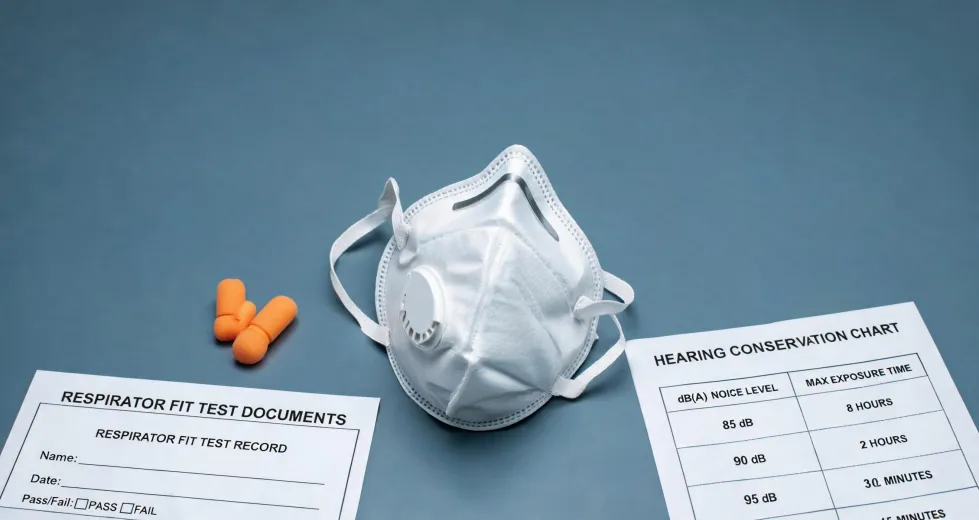
Here's the thing: a respirator that doesn't fit won't protect anyone. We bought 400 Moldex 7000 series half masks—great product—but we didn't do a fit test first. Result? 15% of our employees couldn't get a seal. We had to re-order a different size for those folks. Cost us an extra $2,400 and a week of delayed protection.
Action: Run a fit test on a representative sample (e.g., 10 employees from different face shapes) before placing your bulk order. Most reputable suppliers, including Moldex, can provide sample units for this.
Step 3: Verify the Certification, Not Just the Packaging
Per NIOSH guidelines (42 CFR Part 84), any respirator claiming N95, N100, or P100 must be tested and certified. Look for the NIOSH approval number on the box or the device itself. I've seen knockoffs that look identical to Moldex N95s but lack certification. In 2022, a competitor tried to pass off an uncertified product as compliant. We flagged it because we knew to verify.
Quick check: If the approval number isn't printed on the product or its packaging, it's not NIOSH-approved. Simple as that.
Step 4: Factor in Comfort and Reusability—It's Not Just About Price
Why does comfort matter? Because if a respirator is uncomfortable, employees will take it off. We switched to Moldex N100 masks with the HandyStrap for exactly this reason. The strap design makes donning and doffing easier, and the foam nose cushion reduces pressure points. Our compliance rates went up by 30% after the switch.
Also, consider reusability. Moldex P100 filters can last weeks if stored properly. That's a lower total cost per use compared to disposable N95s for intermittent use. But I should note—this depends on your specific work environment. High dust or chemical levels will reduce filter life.
The question isn't 'which mask is cheapest?' It's 'which mask will people actually wear correctly?'
Step 5: Don't Forget the Bump Cap and Other Supporting PPE
I said 'we need respirators.' My safety manager heard 'we only need respirators.' Result: we forgot to order bump caps for the areas with low overhead hazards. A bump cap isn't a hard hat—it's for bumping into things, not falling objects. But for our warehouse and assembly line, it was the right choice. We wasted a rush order fee on getting them later.
Create a complete PPE list: respirator, bump cap, safety glasses, hearing protection. Order everything together to save on shipping and avoid delays.
Step 6: Build a Relationship with Your Vendor—Not Just a Transaction
Here's the thing: the vendor who gives you the lowest price today might not have stock next month. I've been burned by that. We now work with a distributor who understands our usage patterns and gives us advance notice on price changes and inventory levels. They can also help with training resources—like how to properly fit a Moldex half mask or when to replace filters.
What to ask a potential vendor:
- Do you have dedicated support for safety products?
- Can you provide NIOSH certification documents for each product?
- What's your lead time on bulk orders of N95 masks vs. P100 vs. half masks?
- Do you offer free samples for fit testing?
Common Mistakes to Avoid
Even after choosing a solid vendor, I kept second-guessing. What if I missed a better price somewhere else? The two weeks until delivery were stressful. But I've learned that consistency and reliability matter more than saving a few cents per unit.
Other pitfalls:
- Ordering too many of one size without fit testing first.
- Forgetting filter replacement schedules—write them into your calendar.
- Assuming all N95 masks are the same. They're not. Models differ in breathability, strap comfort, and nose bridge design.
- Waiting until you're out of stock to reorder. Lead times can stretch unexpectedly.
Final Thought
This checklist has saved me from a few disasters and made me look competent when my boss asks, 'How are we managing PPE costs?' The key is not to rush. Take the time to assess hazards, get fit tests done, and choose certified products from trusted brands like Moldex. I'd rather spend 10 minutes explaining these steps to a colleague than deal with a failed safety audit or, worse, a preventable injury.

Maeve Callahan
Maeve Callahan is a head-protection analyst covering Type I and Type II hard hats, climbing-style safety helmets, bump caps, chin straps, suspensions, liners, and face-shield carriers. She applies ANSI Z89.1, EN 397, and EN 12492 criteria while comparing impact attenuation, penetration resistance, lateral deformation, electrical class, retention strength, field of vision, mass, fit range, and temperature conditioning. Her guides help EHS teams, contractors, utilities, and buyers select helmet systems for overhead hazards, work at height, electrical exposure, accessory compatibility, and worker acceptance.