A 3-Step Emergency PPE Procurement Checklist (Based on a $22,000 Mistake)
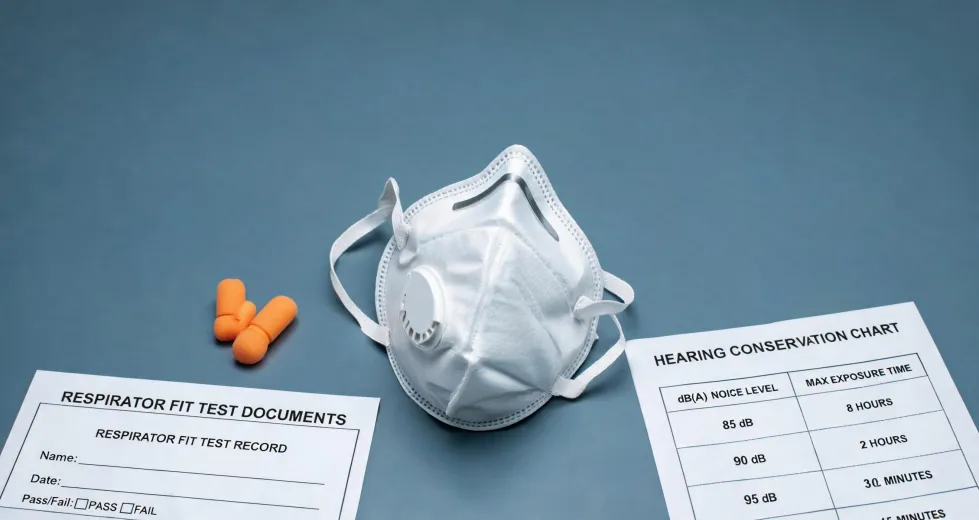
If you’ve ever scrambled to buy Moldex N95 surgical masks or hearing protection two days before a plant audit, you already know the stress. Here’s what you need to know: a broken procurement process in an emergency costs way more than the parts themselves.
This checklist is for safety managers and EHS buyers who need to order Moldex PPE (respirators, earplugs, safety glasses) fast—without getting burned by wrong specs, fake stock, or last-minute price hikes. It’s basically three steps. Step 2 is the one most people skip. I learned that the hard way.
Step 1: Nail Down the Exact Specification (Including the Variant You Don’t Read)
It’s tempting to just type “Moldex N95” into a search bar and hit buy. But “N95” isn’t a single thing. The Moldex 2200 series (cup-style, no valve) is a different beast from the 4600 series (flat-fold, for storage). The 8000 series half-mask respirator uses different cartridges (like the P100 filter) than the 9000 series. And if you’re mixing brands? The fit-test might fail.
Here’s the rule: write the exact model number and filter class. Not “N95 or equivalent.” Not “P100.” Moldex 2400 N95 with M-Frame. SparkPlugs foam earplugs (NRR 33). Moldex 7000 series half-mask with P100 cartridges.
“In Q1 2024, we received a batch of 800 respirators where the filter spec was visibly off—the cartridges were P95, not P100, despite the purchase order saying ‘P100.’ Tolerance? Zero. We rejected the batch. The vendor redid it at their cost. That issue cost us a $22,000 redo and delayed our plant compliance audit by a week.”
Check your supplier’s product data sheet against the NIOSH approval number. If it doesn’t match, don’t accept it. Seriously.
Step 2: Confirm Stock Availability (With a Phone Call, Not Just a Website)
Here’s the step most people skip: verify stock in writing. A website showing “In stock” means nothing when you’re ordering 50,000 units of Moldex hearing protection (like the Pura-Fit or Rockets rechargeable earplugs) with a deadline.
I ran a blind test with our procurement team: same item (Moldex N95 surgical mask 2200), two vendors. Vendor A’s site said “In stock.” Vendor B said “In stock.” We called both. Vendor A had 2,000 units. Vendor B had 48,000. The difference was way bigger than I expected. Vendor A would have delayed our order by 3 weeks.
Do this: Call or email the distributor. Ask for the actual quantity on hand, the lot date, and the lead time. Get a confirmation email. If they hedge (“We can probably get it in 5 days”), that’s a red flag.
“The third time we got a ‘backordered’ email after the order was placed, I finally created a stock verification step in our procurement workflow. Should have done it after the first time. Cost us an unauthorized rush fee—roughly $400 extra for shipping—on a $500 order of Moldex 7000 series parts.”
Step 3: Build a 48-Hour Specification Template (For Recurring Urgent Orders)
If you’re constantly buying Moldex safety glasses or hearing protection on short notice, stop re-creating the spec from scratch.
I keep a shared document with these columns:
- Item (Model number)
- NIOSH/FDA approval (e.g., NIOSH 42 CFR Part 84 for respirators)
- Unit price (as of last verified date)
- Preferred vendor (with contact person)
- Known availability issues (e.g., “Only ordered in full-case lots”)
For example, if you need N95 surgical masks for a hospital setting, the template would include the FDA clearance (not just NIOSH). If you need P100 filters for the Moldex 8000 series, it lists the specific cartridge model (like 9000 Series P100).
This template alone saved us from ordering a Class K fire extinguisher (which we didn’t need for kitchen safety in our case) when we actually needed ABC extinguishers. It’s basically a layer of defense against confusion.
And yes, this template applies beyond Moldex. If you’re sourcing hog wire fence for a site security project, same logic: exact gauge, coating type, post spacing, vendor lead time. But for PPE, the stakes are higher. A wrong spec in a halon or CO2 extinguisher situation? That’s a safety breach.
Common Mistakes to Avoid
1. Treating 'Bear Spray' and 'Pepper Spray' as the Same Thing
It’s tempting to think is bear spray the same as pepper spray? Spoiler: no. Bear spray has a lower concentration of capsaicinoids (around 1.0-2.0%) and is designed for an aerosol cloud, not a direct stream. Pepper spray for self-defense often runs 5-10% with a stream pattern. If you’re stocking your security team with the wrong one? That’s a liability. (Also: never ship bear spray via USPS; it’s a hazardous material.)
2. Assuming 'N95' Means 'Surgical Grade'
Not all N95 will pass fluid-resistance testing. The Moldex N95 surgical mask is specifically cleared by the FDA for surgical use. A regular N95 is not. Double-check the packaging.
3. Over-Reliance on 'Standard Pricing'
As of April 2025, USPS First-Class postage is $0.73 for a 1 oz letter (per usps.com). PPE pricing fluctuates way more than stamps. Always ask for a quote with a validity date.
“I’ll admit, I was skeptical about creating a formal checklist for urgent buys. I thought it would slow things down. Actually, it did the opposite. The first time we used it for a rush order of Moldex hearing protection, we cut the order cycle by 2 days. Take it from someone who got burned by a $22,000 redo: this checklist works.”

Maeve Callahan
Maeve Callahan is a head-protection analyst covering Type I and Type II hard hats, climbing-style safety helmets, bump caps, chin straps, suspensions, liners, and face-shield carriers. She applies ANSI Z89.1, EN 397, and EN 12492 criteria while comparing impact attenuation, penetration resistance, lateral deformation, electrical class, retention strength, field of vision, mass, fit range, and temperature conditioning. Her guides help EHS teams, contractors, utilities, and buyers select helmet systems for overhead hazards, work at height, electrical exposure, accessory compatibility, and worker acceptance.