4-Step PPE Purchasing Checklist for Admin Buyers (Moldex P100, N95 & Hearing Protection)
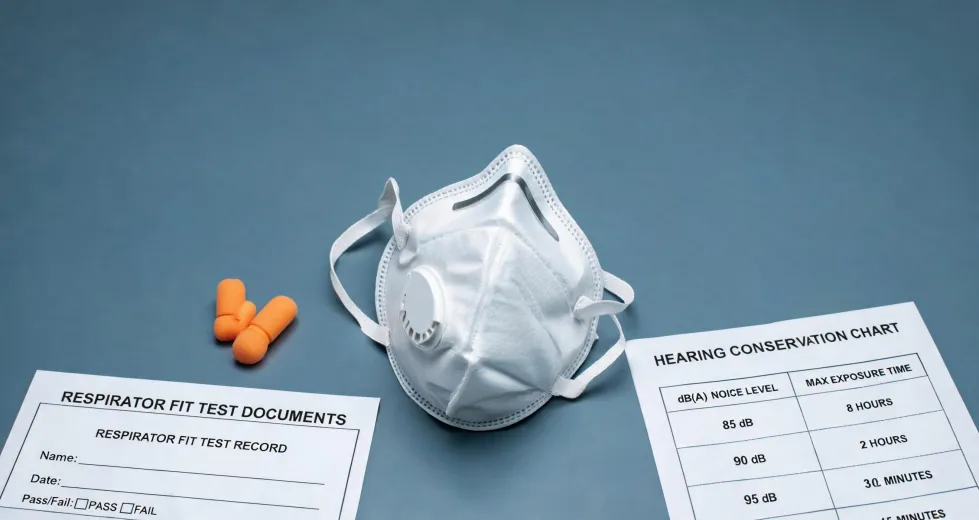
-
Who This Checklist Is For
-
Step 1: Identify Your Protection Needs (Not Just "N95" or "P100")
-
Step 2: Compare Vendors (But Don't Lead with Price)
-
Step 3: Verify Compliance (The Boring Step That Saves Your Job)
-
Step 4: Place the Order (And Double-Check the Shipping Details)
-
Common Mistakes (And How to Avoid Them)
Who This Checklist Is For
You manage PPE ordering for your company — maybe 30 people, maybe 300. You've got one foot in operations and the other in finance. Your internal customers (the folks on the warehouse floor or in the field) need protection that meets OSHA standards, and your finance team needs invoices that don't get rejected.
This checklist is for you if:
- You've ever been asked "Can you just order more of those?" and had no idea which "those" they meant.
- You're juggling multiple brands (Moldex, maybe some 3M, maybe a no-name you regret) and want to standardize.
- You need to prove compliance to a safety auditor or an insurance rep.
Four steps. Do them in order. You'll have a cleaner process and fewer headaches.
Step 1: Identify Your Protection Needs (Not Just "N95" or "P100")
The first mistake most people make: they order a generic N95 mask because that's what everyone asks for. But your team isn't dealing with the same exposure across the board.
Start here:
- Particulate vs. Chemical: N95 and P100 filters handle particulates (dust, mold, silica). If your team works around chemical vapors or gases, they need a cartridge respirator. Moldex's 7000, 8000, and 9000 series half-mask respirators accept both particulate filters and chemical cartridges — check your specific hazard.
- N95 vs. P100 vs. FFP2: Moldex offers N95 (like the 2200, 2400, and 4600 series), P100 (like the 8990 series with P100 filters), and FFP2 (common in European standards). For most construction or general industrial use, N95 is fine. If you're dealing with lead, asbestos, or certain pharmaceuticals, you need P100. Don't guess — check your safety data sheets.
- Hearing protection: Moldex's Sparkplugs, Pura-Fit, and Rockets earplugs offer noise reduction ratings (NRR) up to 33. Higher NRR isn't always better — too much isolation can be a safety hazard if workers need to hear alarms. Go for NRR 29-33 for most industrial settings.
What most people miss: actually checking the expiration date on filters. Moldex filters don't last forever — they degrade over time, especially if stored in a hot warehouse. The standard shelf life is about 5 years from manufacture, but if your storage conditions aren't climate-controlled, that drops. Check the date code on the box.
Step 2: Compare Vendors (But Don't Lead with Price)
Here's something vendors won't tell you: the best price on the first quote is rarely the best deal long-term. I learned this the hard way in our 2024 vendor consolidation project.
What to compare:
- Total cost, not unit price. That cheap N95 from a random distributor? Fine, until you factor in shipping, minimum order quantities, and the time your admin spends chasing invoices. Moldex has a strong network of authorized distributors — you pay a little more upfront, but you get consistent supply and reliable documentation.
- Order minimums. This is where the "small customer" problem hits hardest. Some distributors won't sell you a single case of Moldex masks — they want pallet orders. Others (like many online industrial suppliers) will let you order 5 boxes of P100 filters or 10 packs of earplugs with no minimum. Find the ones that treat a $200 order the same as a $2,000 order. Those vendors are your long-term partners.
- Payment terms. Net 30 is standard, but some smaller distributors want payment upfront or COD. If your company uses purchase orders with 45-day payment cycles, that's a problem. Ask before you order.
My rule of thumb: get quotes from 3 vendors. Don't just compare prices — compare their invoicing process and return policy. The vendor who made the cheapest quote but couldn't email a proper invoice cost us $2,400 in rejected expenses once. Not worth it.
Step 3: Verify Compliance (The Boring Step That Saves Your Job)
Look, I'm not saying compliance is exciting. But I am saying that the safety auditor doesn't care about your relationship with the sales rep — they care about documentation.
Check these before you order:
- NIOSH approval: Every N95 and P100 filter should have a clear NIOSH approval number on the box. Moldex respirators are N95-approved under NIOSH 42 CFR Part 84. If the distributor can't show you the approval number in their listing or on the box, walk away.
- OSHA standards: For respirator use, OSHA 29 CFR 1910.134 requires a written respiratory protection program, medical evaluation, fit testing, and training. You can order the masks, but don't hand them out until your safety officer has the program in place.
- ANSI Z87.1 for safety glasses: If you're ordering Moldex safety glasses (they make them too), make sure they're marked Z87+ for impact protection. Standard Z87 is for basic impact; Z87+ is for high impact — needed for grinding, chipping, or anything with flying debris.
Pro tip: Keep a folder (physical or digital) with the NIOSH approval letters and SDS sheets for every product you order. When the auditor asks, you hand over the folder. Takes 10 minutes to set up, saves hours later.
Step 4: Place the Order (And Double-Check the Shipping Details)
This sounds obvious, but I've messed this up more times than I want to admit. People think expensive vendors deliver better quality. Actually, vendors who deliver quality can charge more. The causation runs the other way — but that doesn't help you if the order goes to the wrong warehouse.
Order process checklist:
- Confirm sizing. Half-mask respirators come in small, medium, and large. Most people default to medium, but a large percentage of the workforce needs small or large. If you order all mediums, half your team won't get a seal. Order a mix — or better, do a fit test first.
- Check for accessories. Moldex respirators need replacement filters and cartridges. If you order the 7000 series respirator but forget to order the P100 filters, your team can't use it right away. Order both at the same time.
- Shipping address and delivery instructions. Sounds obvious. I've had a $4,000 order sent to our old office because I filled in the wrong dropdown. Confirm the address. Check if they require a signature. If your receiving dock is only open 8-4, note it in the instructions.
What most people ignore: lead times. "In stock" doesn't mean "ships today." Ask for a confirmed ship date. Then add a buffer. In 2020-2022, lead times for N95 masks stretched to 12+ weeks. Things are better now, but if you're ordering P100 filters or specialized sizes, don't assume next-day delivery.
Common Mistakes (And How to Avoid Them)
I've seen these happen to new admins and veterans alike. Save yourself the trouble.
- Assuming one size fits all. It doesn't. Not for respirators, not for earplugs. Moldex earplugs come in different diameters and materials — the Sparkplugs are a tapered shape that fits most ear canals, but Pura-Fit has a different profile. If you're ordering for a large team, get a fit kit first.
- Forgetting about storage. Respirators and filters need cool, dry storage. If your warehouse hits 100°F in summer, the filters may degrade faster. Store them in a climate-controlled area if possible.
- Not checking for updates. NIOSH and OSHA standards change. The P100 standard has been stable, but the N95 standard (42 CFR Part 84, Subpart K) has specific testing requirements. Make sure you're buying current-generation products. Moldex updates their product lines periodically — what you bought two years ago may have been replaced by a new model.
- Neglecting training. You can buy the best P100 respirator in the world, but if nobody on your team knows how to fit-test it or change the filters, it's just expensive plastic. Budget for training materials or a toolkit from Moldex.
Honestly, I'm not sure why some distributors make ordering PPE so complicated. My best guess is they're set up for large-volume customers and haven't optimized for the admin buyer who needs a few cases. But the good ones exist. Find them. Hold onto them.

Maeve Callahan
Maeve Callahan is a head-protection analyst covering Type I and Type II hard hats, climbing-style safety helmets, bump caps, chin straps, suspensions, liners, and face-shield carriers. She applies ANSI Z89.1, EN 397, and EN 12492 criteria while comparing impact attenuation, penetration resistance, lateral deformation, electrical class, retention strength, field of vision, mass, fit range, and temperature conditioning. Her guides help EHS teams, contractors, utilities, and buyers select helmet systems for overhead hazards, work at height, electrical exposure, accessory compatibility, and worker acceptance.